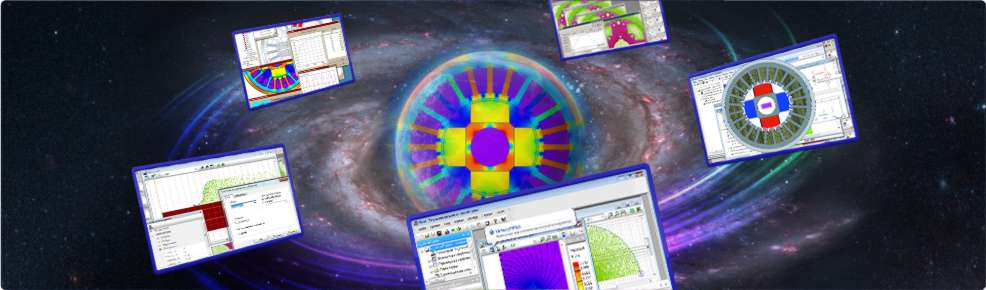
QuickField is a very efficient Finite Element Analysis package for electromagnetic, thermal, and stress design simulation with coupled multi-field analysis. It combines a family of analysis modules using the latest solver technology with a very user-friendly model editor (preprocessor) and a powerful postprocessor.
QuickField requires no training - you may start using it as soon as it is installed on your computer, without knowing the mathematical algorithms used and details of their implementation.
QuickField is a native Windows® application, which was designed for this platform only. It fully utilizes the advantages of a modern operational environment. It is very compact, yet powerful, and can be used for many design applications which require Magnetic , Electric or Thermostructural analysis
QuickField can be effectively applied to many engineering tasks. Most often, it is used in the design of electric motors, turbine generators, actuators, speakers, transformers, induction heating systems, transmission lines and other complex electrical and electromechanical devices.
The application of QuickField is not restricted to this list. If you are unsure as to how to apply QuickField to your problem - contact us, and we will be glad to help you.
For decades, Hollywood sold us magic. The studio system was a walled garden of glamour, where stars were born in pools of soft light and directors were visionaries untouched by doubt. Documentaries like That’s Entertainment! (1974) were glorified clip reels—love letters from the industry to itself.
: A commitment to showing the "truth," even when it isn't "photogenic" or glamorous. girlsdoporn e333 19 years old new
Documentaries have moved from the living room to the global stage, acting as a tool for soft power and humanitarian diplomacy . : Films like (Bollywood) and Hotel Rwanda For decades, Hollywood sold us magic
Ultimately, the rise of the entertainment industry documentary signals a change in how we relate to culture. We are moving from an era of to Active Analysis . (1974) were glorified clip reels—love letters from the
Joshua Oppenheimer's documentary takes a unique approach to storytelling, asking Indonesian death squad leaders to reenact their crimes for the camera. The result is a haunting and surreal film that explores the nature of violence, trauma, and the impact of historical events on individuals and society.